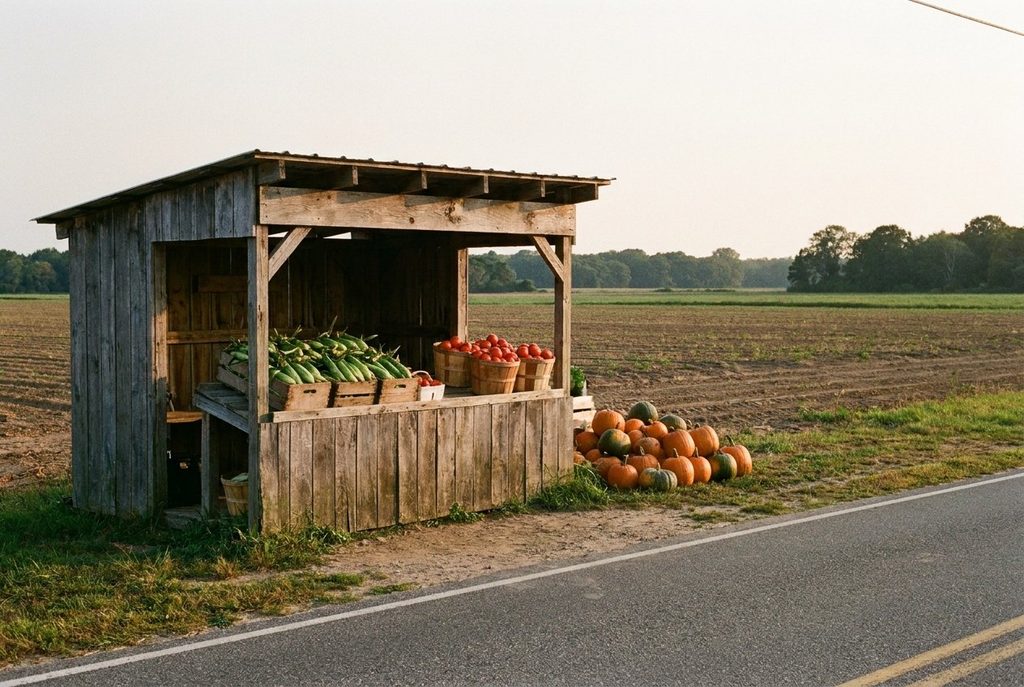
Between the villages, the North Fork is still farm country. From June strawberries to October pumpkins, the roadside stands follow the season, and the old road ends in a village of sea captains' houses.
On the water: The farms sit between two waters: calm, shallow bays to the south and the cooler, stony Sound to the north.
- Best months June, August, September, October
- Getting there Route 25 east from Riverhead
- Bring Cash, cooler bag, reusable bags, patience on weekends
Route 25, the old Main Road, runs the length of the North Fork from Riverhead to Orient Point. Between the villages it passes open fields, barns, greenhouses and orchards, and in season the produce is sold at stands along the roadside. Some are large, with barns full of goods; others are a table under an awning, or a cart at the end of a driveway with an honour box for payment. Driving this road slowly, stopping when something catches your eye, is one of the oldest pleasures on the fork.
The North Fork's farmland is among the most productive in New York. The soils are light and well drained, and the surrounding water keeps the climate mild, with a longer growing season than inland.
The season, month by month
The farm season opens in late May and June with strawberries, often sold as pick-your-own as well as by the box. Early summer brings peas, lettuce and the first squash. By July, sweet corn starts to appear on the stands, and it remains a staple through August. Tomatoes, peppers, beans, cucumbers and melons follow in the high summer, with peaches and other stone fruit in late July and August.
September is the richest month: corn and tomatoes are still coming in, and apples, pears and early pumpkins begin to arrive. October is pumpkin season, when the fields fill with families, corn mazes and hay rides, and roadside stands stack squash, gourds and mums by the door. Traffic on autumn weekends can be very heavy. After Thanksgiving most stands close for the winter, although a few stay open with greenhouse produce, Christmas trees and wreaths.
| Months | What to look for |
|---|---|
| Late May to June | Strawberries, peas, lettuce |
| July to August | Sweet corn, tomatoes, peaches, melons |
| September | Apples, pears, late corn and tomatoes |
| October | Pumpkins, squash, apples |
Harvests shift with the weather each year, so treat these as rough guides and check before you go if you are hoping for something particular.
Potatoes, sod and changing fields
For much of the twentieth century, the North Fork was potato country. Long Island potatoes were shipped in large quantities to the city and beyond, and long, flat potato fields stretched from the road to the bluffs. Potatoes are still grown, but on much less land than before. Sod farms took over many fields, and you can still see the brilliant, even green of cultivated turf being cut and rolled by machine. From the 1970s on, vineyards spread across the fork, and nurseries and greenhouses took more land again.
Much of what remains open is protected by farmland preservation programs, under which the development rights have been sold so the land stays in agriculture. That is a large part of why the fork still looks rural.
The fields change character through the year. In spring they are bare and brown, freshly ploughed, with gulls following the tractors. By midsummer the rows have closed into solid green, and in autumn the cut stalks and stubble turn gold. In winter, cover crops of rye or clover keep the soil from blowing away, and the long views across the fields open up toward the water on both sides of the fork.
See also: Greenport's harbor and waterfront
How to use the roadside stands
Stand etiquette is simple. Pull fully off the road before you stop, and never brake suddenly on Route 25, where traffic moves fast between the villages. Many smaller stands work on trust, with a box or tin for payment, so carry cash in small notes. Larger stands usually take cards. Prices and opening hours vary by stand and by week; most are open daily in high season but shorter hours in spring and late autumn.
- Go early in the day for the best choice, especially for corn and berries.
- Bring a cooler bag in summer if you are driving any distance.
- Pick-your-own fields have their own rules on containers, children and pets; check before you go.
- Route 48, the northern road, also has stands, often with less traffic.
Orient's historic district
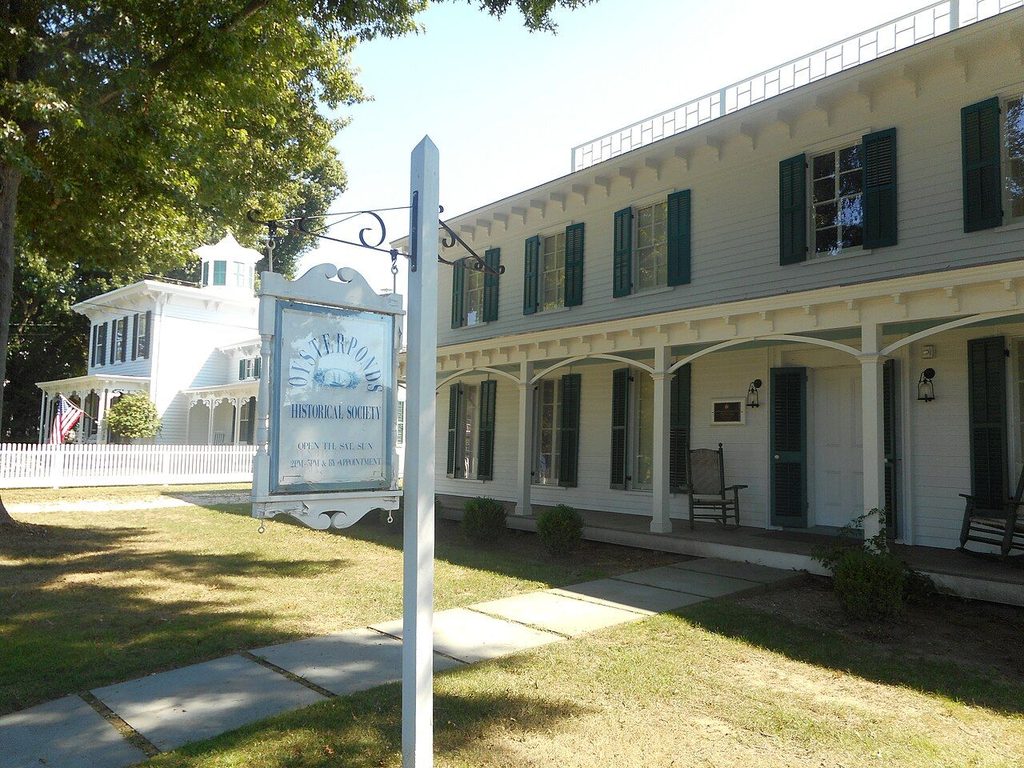
At the eastern end of the fork, Route 25 passes Orient, a village that was settled in the seventeenth century under the name Oysterponds. It took the name Orient in the nineteenth century. South of the main road, Village Lane and the streets around it form the Orient Historic District, a group of well-kept houses from the eighteenth and nineteenth centuries, many built for farmers, sea captains and shipwrights.
i
DanTD · CC BY-SA 4.0The Oysterponds Historical Society keeps a small museum complex on Village Lane, with several historic buildings and collections on farming, fishing and village life. It opens on a seasonal schedule, usually from early summer into autumn. Check its current days and hours before you go. Even when it is closed, the lane is worth walking for its old houses, picket fences and glimpses of the harbor at the end.
A day along the road
A good way to see the farm belt is to drive east on Route 25 in the morning, stopping at stands along the way, and return west on Route 48 in the afternoon, with its views over the Sound. Allow time for a walk in Orient, a swim at Orient Beach State Park in summer, and a look at the lighthouse at Orient Point before you turn back.
The bluffs and old village of Southold sit along the same route, described in the guide to Southold and the Sound-side bluffs. In autumn, try to come on a weekday. The fields are just as bright, the stands just as full, and the road is far calmer.