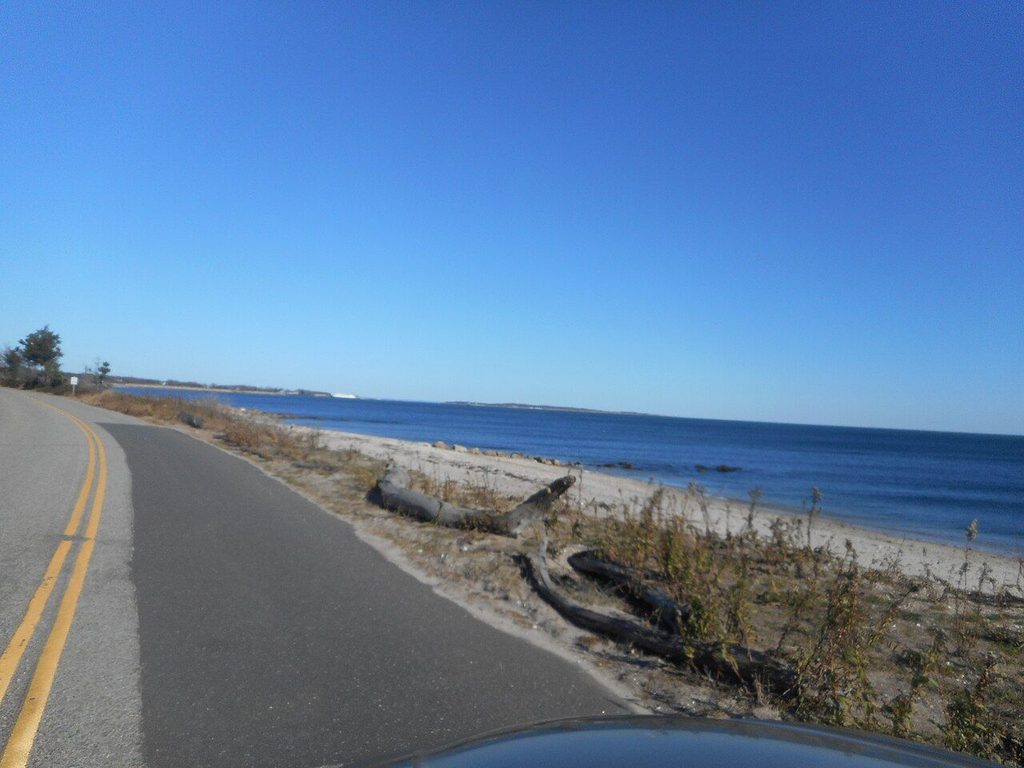
A long, low sandspit runs out from the end of the North Fork, with a forest of red cedar on one edge and gentle bay water on the other. Plan a slow day here.
On the water: Calm, shallow water on the Gardiners Bay side; the harbor side is quieter still. Warm by August, cold in May.
- Best months June, September, early October
- Getting there Route 25 east, turn before the ferry
- Bring Water shoes, sun hat, binoculars, drinking water, bug spray
Route 25 runs out of road at Orient Point, and just before it does, a narrow park road turns off to the south and follows a ribbon of sand into the bay. This is Orient Beach State Park, a sandspit called Long Beach that curls west for several miles between Gardiners Bay and Orient Harbor. It is one of the quietest state parks on Long Island, partly because it sits at the very end of the fork and partly because there is not much here beyond sand, salt marsh, cedar and water. That is the reason to come.
The park makes an easy pairing with the lighthouse and ferry landing a few minutes away, covered in the guide to Orient Point and its lighthouse. It also works well as the last stop of a day spent driving east past the fields and roadside stands.
The shape of the spit
Long Beach is a barrier spit built by sand drifting along the shore. Its south side faces Gardiners Bay, open water with a long view toward the South Fork and Gardiners Island. Its north side faces Orient Harbor, a sheltered pocket of shallow water and salt marsh. The two sides feel very different. The bay side has a proper beach of sand and pebbles, with driftwood piled along the wrack line after storms. The harbor side is softer and greener, with marsh grass, mud flats and wading birds.
The park road runs along the spit for a short distance past the main parking area, and beyond that the land is for walking. Much of the western end is a nature area, and the farther you go, the fewer people you meet.
i
Russ · CC BY 2.0Red cedar, prickly pear and the maritime forest
The spit carries an unusual strip of maritime forest, recognised as a National Natural Landmark. Eastern red cedar dominates, wind-trimmed and low, with blackjack oak and other hardy shrubs around it. On the open sandy ground between the trees grows eastern prickly pear, a native cactus that surprises many visitors this far north. It flowers yellow in early summer, and its flat pads stay green through the winter.
A marked trail loops through the forest and out toward the harbor shore. It is flat and sandy, suitable for most walkers, and takes under an hour at an easy pace. Stay on the path: the cactus spines are fine and hard to remove, and poison ivy grows freely along the edges. Ticks are common in the grass and brush from spring to autumn, so check yourself after the walk.
Swimming on the bay side
The swimming beach lies on the Gardiners Bay side near the main parking area. The water here is usually calm, with small waves and a gentle slope, which makes it a good choice for children and for anyone who prefers a bay to the ocean. There is no heavy surf, and the water warms through the summer, reaching its most comfortable in August and early September. In late May and June it is still cold enough to make most people gasp.
Lifeguards are on duty during the summer season only, and the swimming area is marked. Outside the guarded season or the guarded hours, swimming is not permitted, so check the current rules before you go. The beach has a bathhouse and basic facilities near the parking area, and a summer food concession usually operates nearby, though what is open varies year to year.
See also: Birds and bays of the North Fork
Ospreys and other birds
Ospreys are the signature bird of the spit. They return from the south in March, rebuild their large stick nests on tall platforms and poles, and raise their young through the summer before leaving again in September. From the beach you can watch them hover over the shallows and drop feet first onto fish. Keep a respectful distance from any nest, and if a bird starts calling loudly or circling overhead, you are too close.
The marsh and harbor side draw egrets and herons in the warm months, and terns fish along the shore in summer. Parts of the beach may be fenced off in spring and early summer to protect nesting shorebirds. Respect those fences and signs. For the wider picture of the area's birdlife across the seasons, the guide to birds and bays of the North Fork covers ospreys, terns, winter ducks and horseshoe crabs in more detail.
Long Beach Point and the Bug Light
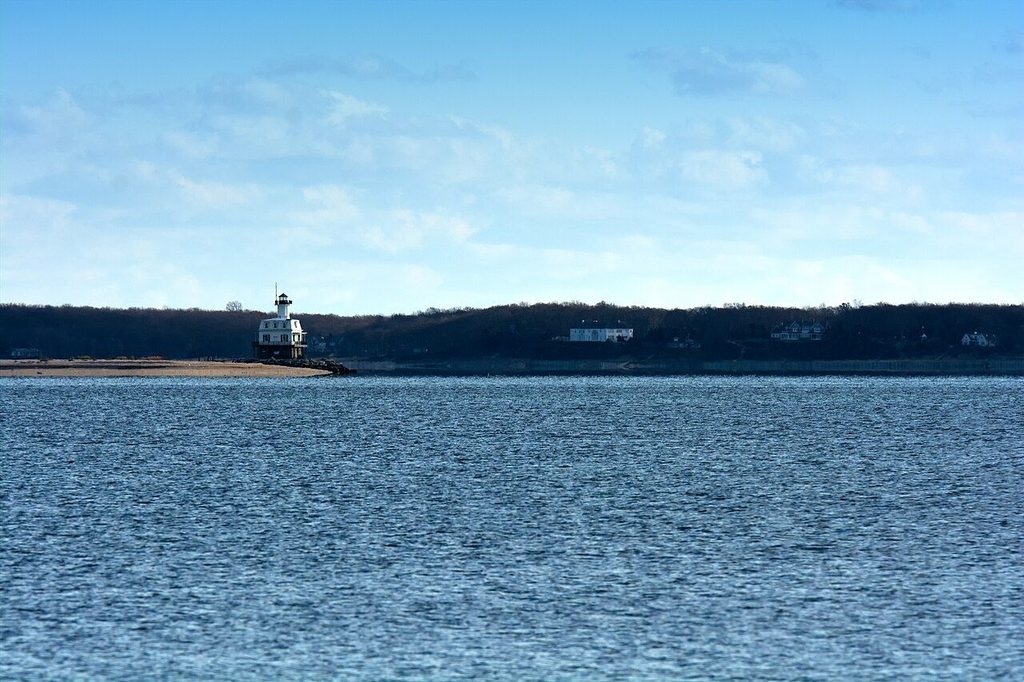
At the far western tip of the spit, Long Beach Point looks across the mouth of Orient Harbor toward Shelter Island. Just off the point stands the Long Beach Bar Lighthouse, known locally as the Bug Light because its original frame, raised on screw piles, looked like an insect standing on the water. The first light was built in the late nineteenth century and was destroyed by fire in the 1960s. The structure you see today is a replica, built by local volunteers and later relit as an aid to navigation.
The walk out to the point is long, several miles of soft sand there and back, with no shade, water or facilities. Allow plenty of time, carry water, and turn back early if the heat or wind is strong. You can also see the Bug Light from the water: boat trips to it run at certain times in summer, and kayakers paddle across the harbor on calm days. Do not try to wade or swim out to it.
The walk out to the point is long, several miles of soft sand there and back, with no shade, water or facilities.
Practical notes
The park charges a vehicle use fee in the main season, and the hours change through the year. Check the current fees, hours and any closures with New York State Parks before you go. Dogs are restricted in parts of the park, especially on the swimming beach in summer, so look at the rules before bringing one.
The park road is exposed to the weather. After a strong storm, sand and debris can close it for a time, and at high tide in storms the bay can wash across low points. In winter the park is very quiet, and the beach is good for walking and for watching sea ducks offshore.
- Bring your own shade in summer: there is little natural cover on the beach.
- Water shoes help on the pebbly shoreline and among the shells.
- Fishing is allowed in some areas; check the rules and any licence needed.
- Carry out what you bring in.
If you have time left, drive back west through Orient village, past the old houses described in the guide to farm stands and fields along Route 25, and continue on to Greenport for the evening.